

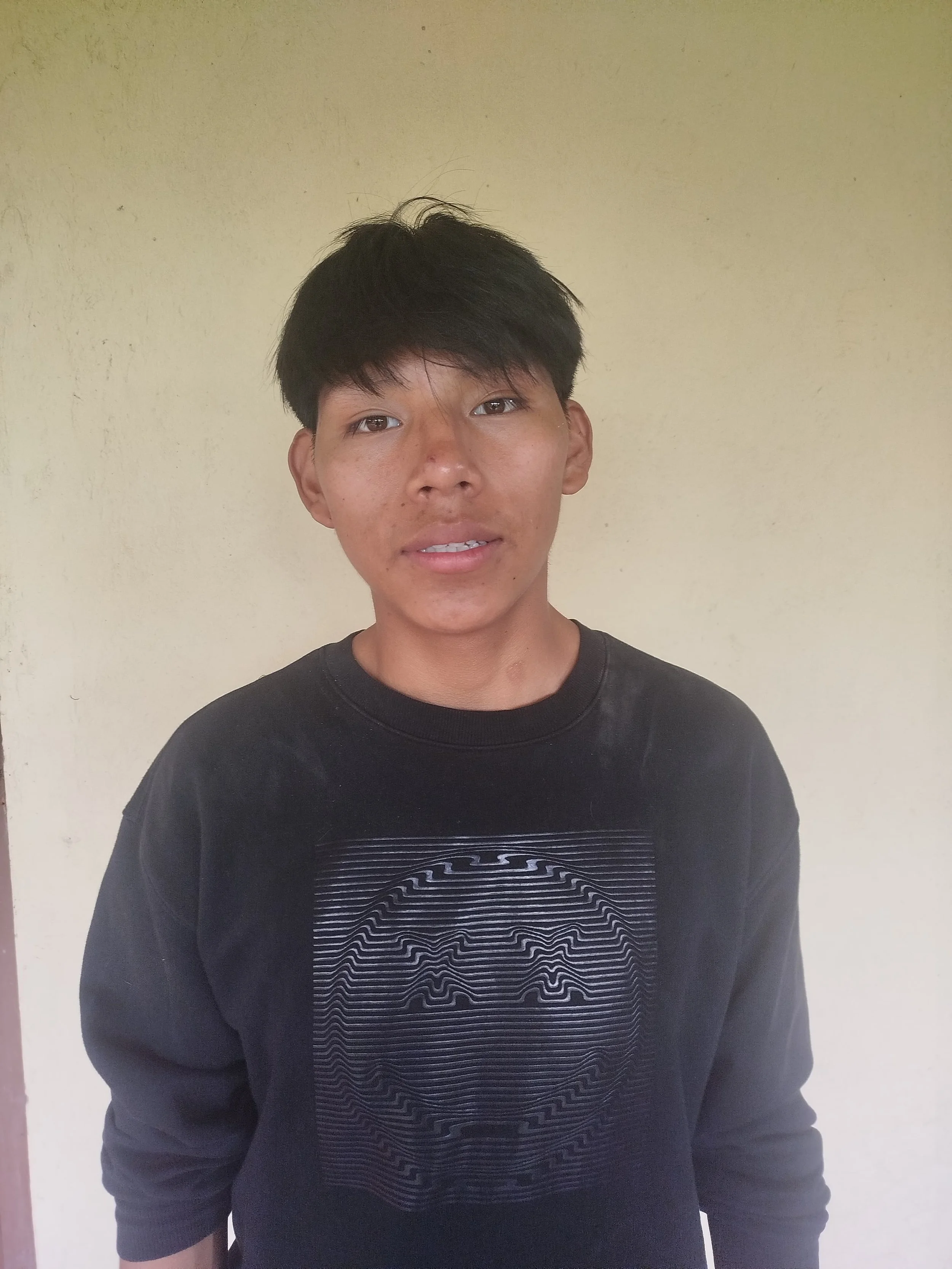
Elvis Morales
Elvis arrived at our transition house through a different route than most of our young people. He was Fredi's companion during his time at COMETA, the correctional facility for adolescents in conflict with the law. Unlike other residents, Elvis has some family references: uncles who live in the area and represent the only family he knows.
When he turned 18 and graduated from COMETA, Elvis faced a common dilemma among young people in his situation: he had a few months left to graduate from high school, but didn't have a stable place to live that would allow him to complete his studies. It was Fredi who suggested we consider Elvis for the transition house.
Since one of our core values is offering opportunities to people with limited resources and limited family support, we invited Elvis to join the program. His arrival coincided with the start of a new Transformation Academy cycle, which allowed him to participate from the beginning in our training process.
Since his admission, Elvis has demonstrated different characteristics from the other young people. He is notably active regarding household duties and his academic responsibilities. He fulfills what's asked of him, keeps his space organized, and participates in scheduled activities. However, his adaptation process hasn't been completely smooth.
Elvis lived very independently before arriving at the house, which created some tension with our structured communal living model. He's accustomed to making his own decisions without consulting, managing his time according to his own criteria, and not being accountable to anyone. These characteristics, while showing autonomy, sometimes clash with the community life dynamics we promote at Pneuma.
Work with Elvis has focused on teaching him values of coexistence, teamwork, and sustained discipline, factors that are an essential part of our Transformation Academy. One of his greatest areas of development is the discipline to achieve long-term objectives and reach important goals that will mark his future. Elvis tends to be impulsive in his decisions and sometimes struggles to maintain consistency in commitments that require prolonged effort.
During his stay, Elvis worked on weekends while dedicating himself to his schoolwork during the week. This balance between work and studies has allowed him to maintain some economic independence and develop time and resource management skills, competencies that will be valuable in his future.
Elvis has a clear and specific vision: he wants to be a police officer. Once he graduates from high school this month, he plans to move to the city of La Paz to enter the police academy. This determination is admirable and reflects a genuine desire to serve his country and contribute to society from a position of authority and citizen protection.
During our Transformation Academy sessions, Elvis has identified natural administrative skills that, as he himself recognizes, could allow him to become an entrepreneur in the future if a police career doesn't turn out to be his definitive path. This mental flexibility is positive and shows openness to different possibilities.
What's interesting about Elvis is his awareness of the impact he wants to generate. He's determined to create positive change in society through whatever profession he chooses, whether as a police officer, entrepreneur, or in any other role he plays. That clarity of purpose at 18 years old is notable.
However, Elvis is still in a maturation process. Unlike young people like Fredi, Fernando, or José, who have been in the program longer and have experienced deeper transformations, Elvis has had a relatively brief stay. He has participated in the Transformation Academy, fulfilled basic expectations, but his story with Pneuma is still in its initial stages.
The challenge with Elvis is that, having family references and such a specific vision of his immediate future (the police academy), he hasn't developed the same level of rootedness and commitment to the training process as other residents. He sees the transition house more as a temporary resource than as a space for comprehensive transformation.
This isn't necessarily negative; it simply reflects that each young person has different needs and trajectories. For Elvis, Pneuma represented a bridge between COMETA and his next step, a safe space to complete his secondary studies and participate in basic life skills training.
Soon, Elvis will be another graduate of our house. His story with us will have been brief but significant. We provided what he needed at a critical moment: a place to live, structure to complete his studies, and basic training in coexistence and discipline that, we hope, will serve him in his police career.
Elvis's story reminds us that not all young people who pass through Pneuma need the same level or duration of intervention. Some, like Elvis, need specific, targeted support at a transition moment. Others require more prolonged and deep accompaniment. Our flexibility to adapt to different needs is part of what makes our model effective.
Elvis Morales represents a different type of success: a young man with clear vision who used available resources to reach his next stage. His determination to serve as a police officer and his awareness of the social impact he wants to generate are promising. We wish him the best of success at the police academy and trust that the values of coexistence and discipline we worked on with him will be useful in his professional future.